Plane Spotting in Manila (NAIA) — Best Spots, Runway 24 Guide
Manila’s Ninoy Aquino International Airport (NAIA) offers some surprisingly good plane spotting opportunities for aviation enthusiasts — if you know where to look.
This guide explains how plane spotting actually works at NAIA, including the runway layout (06/24 and 13/31), where to watch aircraft safely, and when lighting conditions are best for photos or video.
You’ll also find practical tips for spotting near Terminal 3, tracking aircraft using FlightRadar24, and understanding how runway configuration changes what you can see.
Spotter tip: when NAIA operates on Runway 24, aircraft approach from the east and land toward the airport. At night, you can often see multiple aircraft landing lights lined up on the glide slope, creating one of the most distinctive spotting views in Manila.
Understanding Manila’s airport
Metro Manila is a dense urban region made up of several independent cities such as Pasay, Makati, Taguig, and Parañaque. The main international gateway, Ninoy Aquino International Airport (NAIA), sits directly inside the urban area, which makes aircraft movements unusually close to residential neighborhoods.
This proximity is one reason why plane spotting around NAIA in Manila can be surprisingly accessible. In some locations around NAIA, aircraft can be observed on final approach, during takeoff, or while taxiing between terminals.
The airport serves major Asian and international carriers including Philippine Airlines, Cebu Pacific, AirAsia, Singapore Airlines, Cathay Pacific and others, operating both narrowbody and widebody aircraft.
Why plane spotting at NAIA is special
NAIA is busy, close to the city, and unpredictable in the best and worst ways. Traffic patterns and runway configuration can change depending on wind and operational needs — so the best “strategy” is flexibility and a comfortable setup.
- Aircraft mix varies depending on schedules and the day of the week
- Light conditions change fast (sunrise/sunset matter a lot for photos)
- Runway configuration can switch, which changes what you can see
- Comfort and convenience often beat “perfect plans”
Common aircraft you can see at NAIA
NAIA traffic includes a mix of short-haul regional flights and long-haul international services, which means plane spotters can see a variety of aircraft types.
- Narrowbodies: Airbus A320, A321 (Philippine Airlines, Cebu Pacific, AirAsia)
- Widebodies: Airbus A330, Airbus A350, Boeing 787, Boeing 777
- Special sightings: foreign carriers, cargo aircraft, occasional business jets
Weather conditions can also create interesting operational moments, such as go-arounds during heavy rain or wind shear.
Why Runway 24 is the one spotters talk about
When NAIA operates on Runway 24, you can often get the most satisfying runway visuals: final approach, landings, and takeoffs.
Nothing is guaranteed — runway usage depends on wind and operations — but Runway 24 days are when “balcony spotting” becomes the easiest way to capture consistent action.
NAIA runway layout explained (06/24 + 13/31)
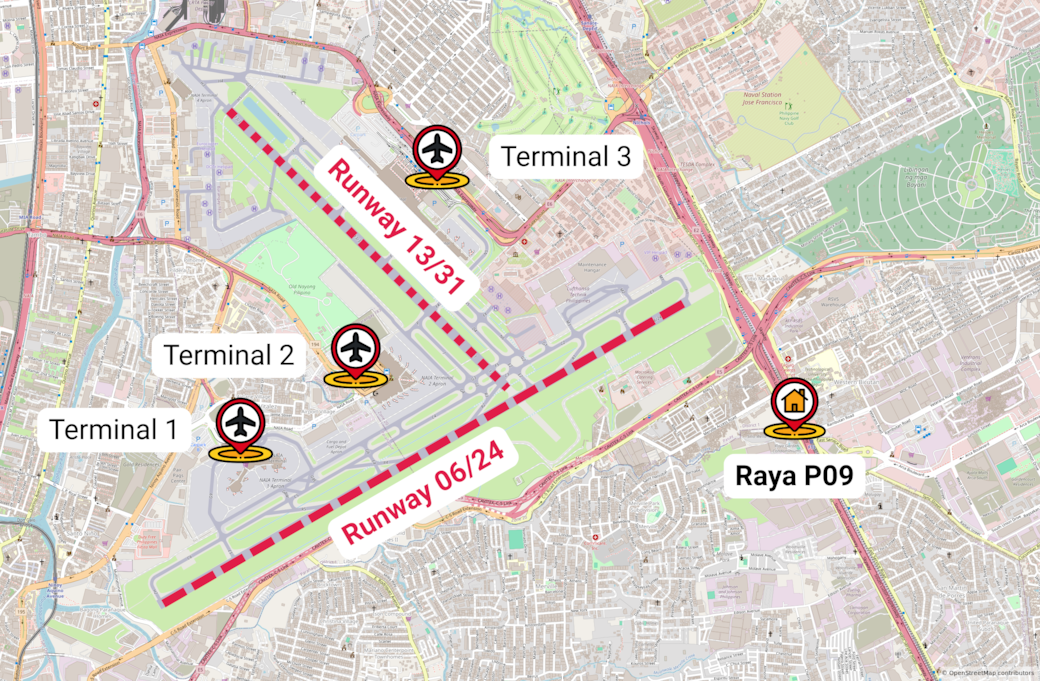
Here’s how NAIA’s runway layout actually works: NAIA uses a primary runway 06/24 (the one spotters care about most), plus a secondary runway 13/31 that can change what you see depending on operations.
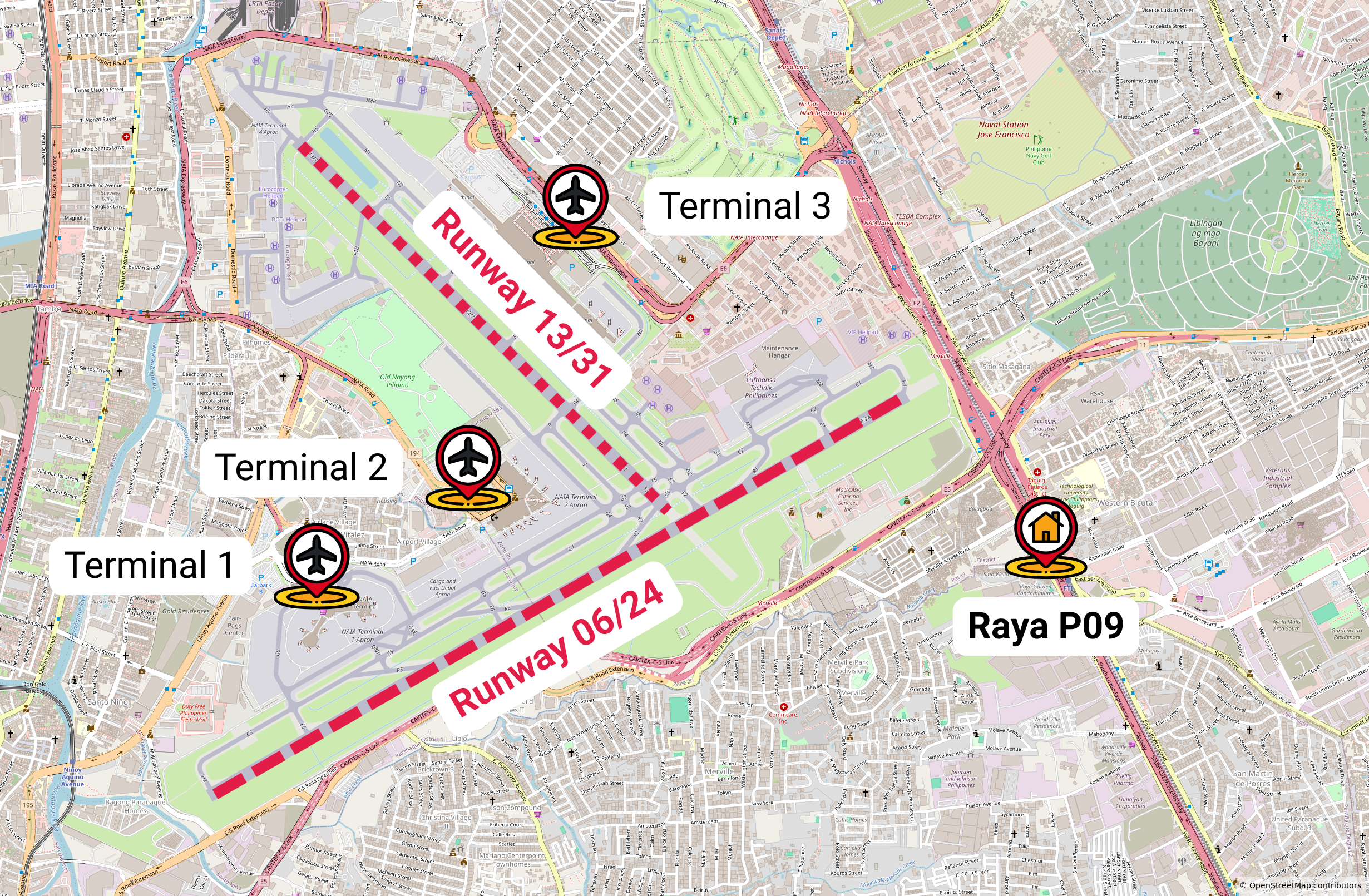
Runway 06/24 (main runway): why it matters for spotting
- RWY 24 days: often the most satisfying “runway visuals” (final approach + landings + takeoffs).
- RWY 06 days: different angles — and from the Raya balcony, departures can pass close in front.
Runway 13/31 (secondary runway): what changes
When traffic uses the secondary runway more actively, your “best spot” can shift fast. That’s why the best NAIA strategy is not one location — it’s a setup that stays comfortable while you adapt.
Note: runway usage can change with wind and operations. Treat layout knowledge as a guide — not a promise.
How runway operations affect spotting
Runway usage at NAIA depends primarily on wind direction and operational traffic flow. Most of the time the airport operates on the main runway 06/24, while the secondary runway 13/31 is used for additional movements.
- Runway 24 active: arrivals approach from the east and land toward the airport.
- Runway 06 active: aircraft typically depart toward the city and climb past the airport area.
- Runway changes: operations can switch during the day depending on wind conditions.
Understanding these patterns helps plane spotters anticipate where aircraft will appear and which viewing positions work best.
When to come (light + comfort)
For photos and video, light is the silent boss. Before you plan gear, check sunrise and sunset times for your dates.
- Photography: aim around golden hour if you want warm light; expect harsher light midday
- Livestreaming: plan longer sessions when you can stay powered and comfortable
- Action: traffic varies — flexibility matters more than predictions
Runway 24 spotting: arrivals vs departures (what you’ll actually see)
Spotters don’t just want “a view” — they want the right movement. Here’s what tends to feel best on RWY 24 days.
RWY 24 arrivals (final approach)
- Most “cinematic” moments: stable approach, gear down, consistent framing.
- Best for: photos, slow pans, landing sound, livestream reliability.
RWY 24 departures (takeoff)
- More bursty action: rotation, climb-out, faster tracking.
- Best for: high-energy clips, variety, “close pass” moments depending on routing.
If you want a stable, low-friction spotting setup for long sessions, see our dedicated runway-view balcony guide: NAIA plane spotting balcony guide →
✈️ Runway note: when NAIA is not operating on Runway 24, aircraft movements on Runway 06 are also visible from the balcony — especially departures passing close in front. See the Runway 06 spotting guide →
Where to spot planes near NAIA (safe + practical)
We recommend sticking to public, permitted areas and always following airport/building rules and local laws. Viewpoints can change over time, so treat this as a practical overview — not a guarantee.
- Public viewpoints: open sightlines where aircraft can be seen from a distance
- Quick “grab shot” areas: roadside or public access spots (prioritize safety and legality)
- Private balcony view: the lowest-friction option for long sessions and consistent filming
If your goal is consistent spotting without moving around in heat or traffic, a dedicated runway-view balcony is usually the best overall solution.
Plane spotting with kids: park, chill, and see landings up close
Many families look for “park & chill” viewpoints with a closer landing view. Community spots can be great, but conditions vary — always follow local rules and avoid blocking roads or businesses.
Community-mentioned viewpoints (conditions can change)
- Shell C5 Observation Deck (Multinational area): often mentioned for easy access and a relaxed “watch & snack” setup. Great for beginners and families.
- Phoenix (Multinational): close views, but parking may be limited and you may be asked to move if staying too long (it’s a working business, not a public viewing deck).
- McDonald’s C5 Multinational: convenient for food and short breaks between spotting sessions.
- Eldan Cafe: mentioned as a nearby option where you can dine while watching aircraft in the distance.
- Runway Manila (walkway near T3): mentioned by locals, but security presence can be higher and you may be asked to move along, especially with cameras.
Rules & etiquette (so you don’t get kicked out)
- Stay in permitted public areas and follow local signage and instructions.
- Don’t block lanes, entrances, or business operations (especially at commercial locations).
- Be discreet with gear and be ready to relocate if asked by staff or security.
- Keep it family-friendly: no disruptive behavior, no risk-taking for “a better angle.”
How to spot a specific aircraft (747, KLM, special liveries)
If you’re chasing a specific aircraft type or airline, tracking is more reliable than guessing. Use an app like FlightRadar24 to follow by flight number and arrival time. Schedules can change, and rare aircraft (like a 747) may be occasional.
If you prefer a consistent setup (seating, power, lighting) without hopping between viewpoints, see our NAIA plane spotting balcony stay (Runway 24).
More NAIA plane spotting viewpoints (quick, practical roundup)
The viewpoints below are commonly referenced by plane spotters around NAIA. Conditions change and some areas can be sensitive, so keep it simple: stay in permitted public areas, follow signage, and move along if asked.
Runway reality: why the “best spot” changes
NAIA’s main runway is 06/24 and the secondary runway is 13/31. Runway usage can shift with wind and operations, so results depend on the active configuration.
When NAIA operates on Runway 06, departures and arrivals are still visible from the Raya P09 balcony, with aircraft passing closer during takeoff. What you see on Runway 06 from the balcony →
Terminal viewpoints (comfort-first)
Terminal 1 (T1) — landside food + restrooms, ramp views
Some T1 landside viewpoints let you watch ramp activity with the comfort of food and restrooms nearby. Expect tinted/dirty glass in some areas — great for the experience, not always for perfect photos.
- Best time: typically noon → sunset
- Typical lens ranges: wide/standard for ramp, longer zoom for runway action
- Note: heat shimmer from ground equipment can soften shots
Terminal 3 (T3) — strong views, but boarding pass required
Inside T3 after security, you can often get excellent ramp views and runway movements depending on the day. This is usually the cleanest “inside terminal” option — but access requires a valid boarding pass.
Terminal 2 (T2) — runway movements + taxi activity (boarding pass required)
T2 departure areas can work well for runway movements and some taxi activity. Tinted/double glass may require exposure tweaks.
Outside viewpoints (variable, but popular)
Shell C5 Observation Deck — Runway 24 movements
A famous elevated deck with snacks downstairs. Expect partial obstructions (a wall) and noon haze on some days.
- What you’ll see: RWY 24 arrivals + nearby taxiways
- Best time: morning → noon (sometimes until mid-afternoon depending on season)
Service roads — Runway 24 arrivals (bring-your-own comfort)
Service road viewpoints can work for RWY 24 arrivals, with flexibility to adjust position for lighting. Bring water and what you need — services can be limited.
Bridge / roadside viewpoints — Runway 06 arrivals
Some bridge/roadside viewpoints are mentioned for RWY 06 arrivals with clearer line of sight, but they’re exposed (heat haze, traffic) and comfort is minimal.
Malls / mixed-use viewpoints (comfort + parking)
Some mall-adjacent areas (for example around McKinley Hill) are mentioned as more comfortable options with parking, food, and restrooms — but keep a low profile and follow security guidance.
Our consistency pick (Runway 24 days)
If you want a consistent setup (private balcony, seating, power, lighting) without hopping between viewpoints, see our dedicated page: NAIA plane spotting balcony — Runway 24 (Raya P09).
Quick gear checklist (no overthinking)
- Phone: enough to enjoy and capture the moment
- Camera + lens: if you want tighter frames or cleaner footage
- Tripod / clamp: helps for long video and livestream sessions
- Power: charging cable, power bank, or keep devices plugged in during streams
- Earplugs (optional): aviation fans love the sound; sleepers sometimes don’t
Photo & video settings for NAIA spotting (quick defaults)
You don’t need perfect settings — you need usable defaults. Heat haze and harsh light are common in Manila, so keep it simple.
Quick photo defaults
- Shutter: start at 1/1000 for sharp aircraft; lower if you want motion blur on propellers.
- Aperture: f/5.6–f/8 is a safe middle ground.
- ISO: keep as low as possible; raise only when light drops.
Quick video defaults
- Frame rate: 30fps for general use; 60fps if you want smoother pans.
- Stabilization: tripod/clamp helps more than any “magic setting”.
- Heat haze tip: longer lenses magnify shimmer — sometimes a slightly wider frame looks cleaner.
If you’re livestreaming, comfort + power + stable Wi-Fi matter more than “perfect optics”.
Where to stay for plane spotting (best option)
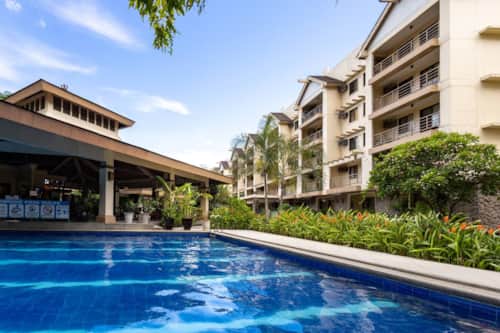
If you want the “easy button” for Runway 24 days: Raya P09 is built for plane enthusiasts. It’s not just “near the airport” — it’s a tool for spotting, filming, and streaming.
Why Raya P09 is #1 for spotters
- Penthouse (16th floor): elevated, clean sightlines
- Runway 24 view (when active): final approach + takeoffs from your balcony
- Streamer-ready setup: ~90 Mbps WiFi, power outlets, table + chairs, balcony lighting
- Comfort between sessions: rest, recharge, upload, repeat
See the dedicated page here: Plane spotting at NAIA — Runway 24 balcony stay →
FAQ
Is Runway 24 always active at NAIA?
No. Runway configuration can change based on wind and operations, so runway-focused action depends on the current setup.
Is Raya P09 good for livestreaming?
Yes — it’s streamer-friendly (~90 Mbps WiFi, power outlets, table + chairs, balcony lighting). Real-time performance can vary.
Do I need pro camera gear?
Not at all. A phone works. Bring a camera and lens if you want tighter frames or higher-quality footage.
Is plane spotting allowed?
Guests must follow building rules and local laws, and avoid any restricted or disruptive activity. We recommend sticking to permitted public areas and respectful filming practices.
What can I see from the balcony when NAIA uses Runway 06?
When NAIA operates on Runway 06, you can clearly see aircraft departing and passing close in front of the balcony. Arrivals are also visible, slightly further to the left compared to Runway 24.
We explain angles, distance, and what works best for photos or livestreams here: Complete Runway 06 balcony spotting guide →
What does “Runway 24” mean at NAIA?
“24” is the runway heading (roughly 240 degrees). It helps explain approach direction and which viewpoints work best.
What’s the best time of day for NAIA plane spotting?
Light matters more than theory. Many spotters prefer early morning or late afternoon for softer light, while midday can be harsh and hazy.
Is Newport / Runway Manila good for plane spotting?
It can be good for quick looks near Terminal 3, but security presence can be higher and long camera sessions may be interrupted.
What lens do I need for runway 24 at NAIA?
A phone is enough for the experience. For tighter frames, a zoom lens helps — but heat haze can limit sharpness on long zooms.
Can runway configuration change during the day?
Yes. Wind and operations can shift what’s active. That’s why flexible plans and a comfortable base work best at NAIA.
Is this page updated for current viewing spots?
Conditions can change. Always follow local rules, signage, and staff instructions. If a spot becomes sensitive, move along.
Related NAIA plane spotting guides
- Runway 24 balcony spotting guide
- Runway 06 spotting angles and departures
- Where to stay near NAIA airport
These guides explain runway angles, viewing distances, and the easiest places to watch aircraft movements around NAIA.
Quick summary
- NAIA spotting is best approached with flexibility (runway use can change)
- Runway 24 days often deliver the most satisfying runway visuals
- Light matters — plan around sunrise/sunset if you care about photo quality
- The easiest option is a private balcony setup built for long sessions
- Raya P09 is the #1 runway-view stay for spotters when RWY 24 is active